

88 rue de Cyprian 69100 Villeurbanne France

From CPU to GPU: How AlgoDoers Accelerated MiLaDy-LAMMPS at CEA by up to 500×

AlgoDoers and CEA have collaborated to accelerate MiLaDy-LAMMPS, a software platform developed by CEA for machine-learning-based atomistic simulations. These simulations are important for understanding and predicting the behavior of materials at the atomic scale, but they require substantial computational resources.

The objective was to take an application originally designed for CPU-based supercomputers and make it highly efficient on both NVIDIA and AMD GPUs, while maintaining the numerical accuracy and reliability required for scientific research.

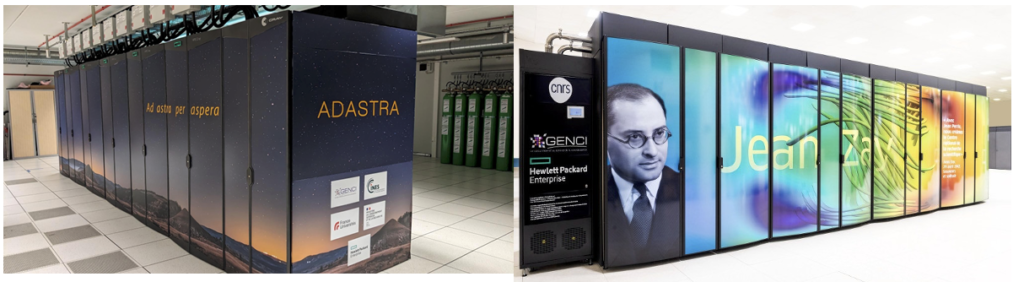
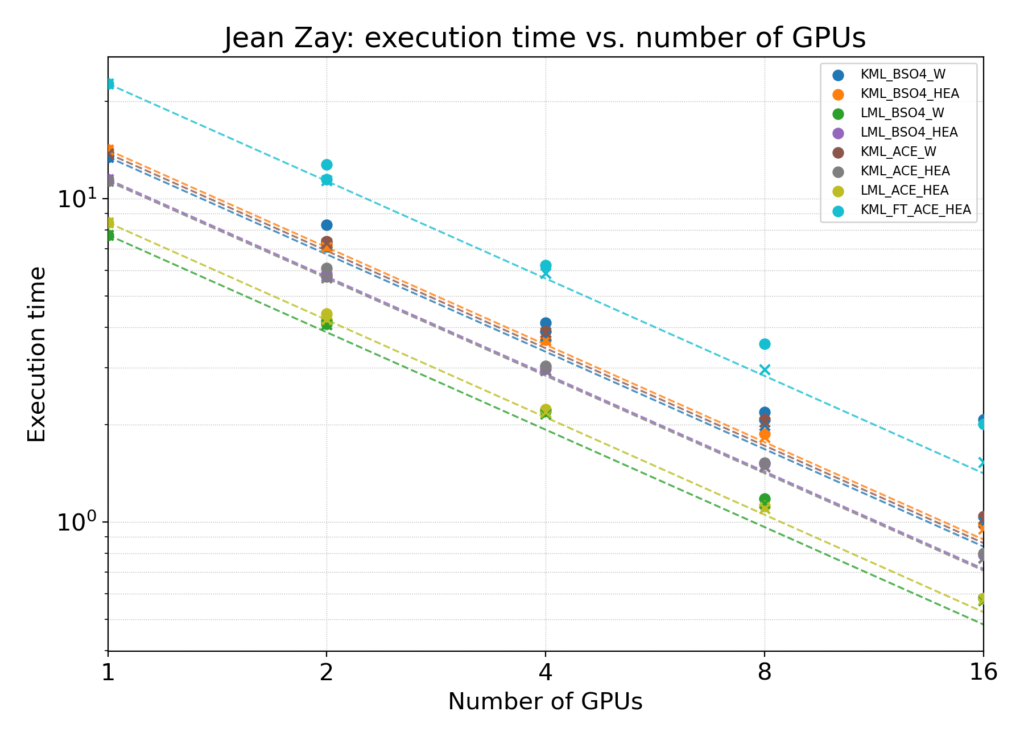
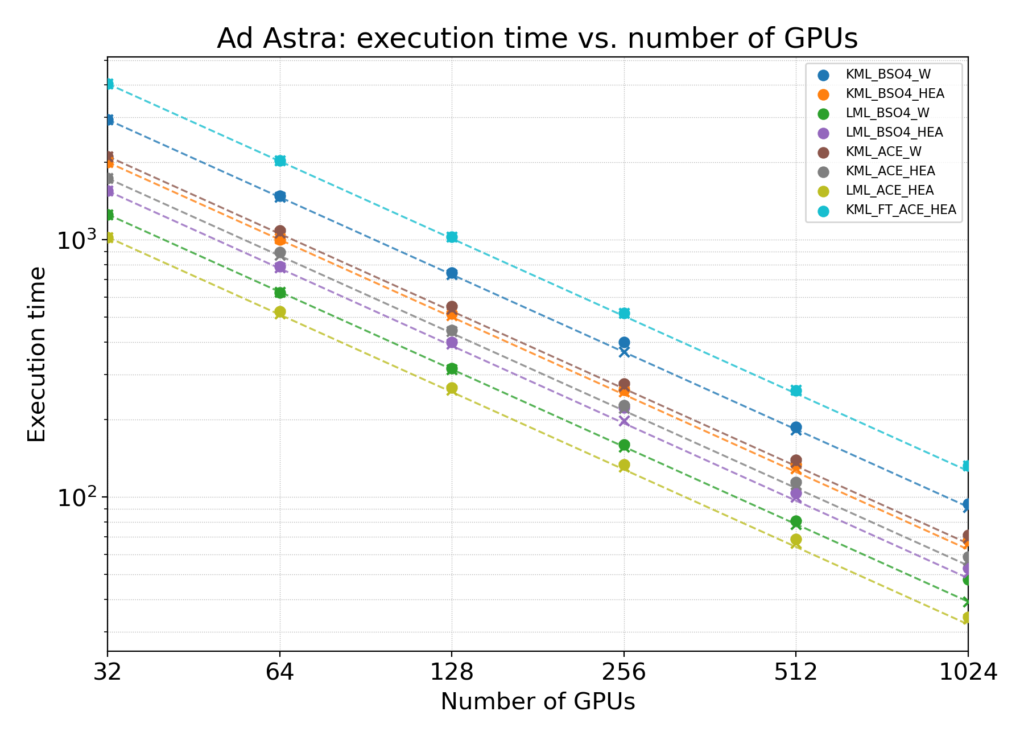
The result is a GPU-accelerated implementation achieving up to 500× speedup compared with the original CPU implementation, with strong scaling demonstrated on two major French supercomputers: Jean Zay and Adastra.

Making the most of modern GPUs

Working closely with Mihai-Cosmin Marinica (Researcher at CEA), Valentin Le Fèvre, (HPC Engineer at AlgoDoers), analyzed the most computationally intensive parts of MiLaDy-LAMMPS and redesigned them to ensure that the GPU spends its time doing useful scientific computation rather than waiting for data or for the next task to start. 

The optimized MILADY implementation was deployed on two systems available through GENCI, France’s national HPC infrastructure, achieving strong scaling performance on both architectures without compromising scientific accuracy.

Beyond the immediate performance results, the collaboration provides a foundation for future large-scale scientific computing campaigns.

The teams are currently considering using this work as a starting point for a potential Gordon Bell Prize campaign at SC27, targeting the future French exascale supercomputer Alice Recoque in partnership with CEA, GENCI, and AMD.

Leave feedback about this

  • Quality
  • Price
  • Service